
We are all aware that we should minimise sun exposure and wear sunscreen especially now the ozone layer is depleting and no longer providing an extra natural barrier to the sun.
Whilst many of us feel and look better with a tan, there are many precautions we should take. Having spent the summer trying to convince my teenagers they need to be responsible and protect their skin, I thought I’d write about it!
How does Light damage our skin?
Ultraviolet Light Rays B (UVB)
UVB rays penetrate the epidermis and are known as the rays which cause burning. They oxidise the fats in the cell membranes, ruining their barrier function. Some UVB rays manage to get further into the epidermis, causing sunburn which is effectively oxidative damage to the DNA and other proteins.
The redness and inflammation caused by sunburn is a result of the oxidation and the dilation of blood vessels which are the skin’s attempts to protect and repair itself. This goes on long after the initial sun exposure and the cascade of oxidants sets the scene for potentially cancerous cell changes later on.
Ultraviolet Light Rays A (UVA)
UVA rays cause oxidative damage to cells and the connective tissue in the dermis, which leads to burning and ageing. Initially believed to be less harmful than UVB, it is now known that UVA rays can penetrate further into the skin, into the dermis, where they damage collagen and elastin. They can penetrate clouds and glass.
The Link to Premature Ageing and Cancer
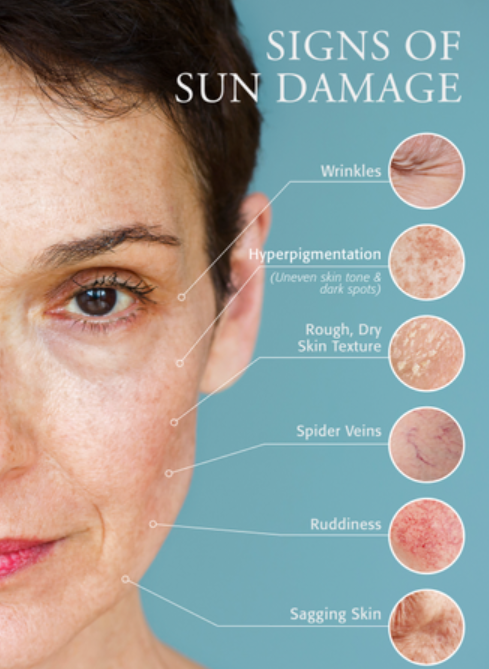
Oxidative damage to skin cells continues long after exposure causing long-lasting damage to skin cells and connective tissue. This damage manifests in hyper pigmentation (malfunction of melanocytes), loss of skin volume and elasticity (destruction of connective tissue) and cell malfunctions and malformations (leading to Skin Cancer).
What is the effect of light at a Molecular Level?
• it interferes with the skin cell’s ability to make proteins and reproduce properly
• speeds up the replication of damaged cells
• hardens the collagen and elastin which normally keep our skin strong and elastic
• breaks down the important fats in the cell membrane and ultimately creates a dry rapidly ageing skin which is even more susceptible to further damage.
So What Are Our Natural Defences?
Our skin does have remarkable protective mechanisms.
Melanin
The first defence that comes into play, but only if we carefully control our exposure to the sun, is melanin. Melanin is the pigment produced in the body that gives the skin, hair and iris of the eyes their colour. Individuals with darker skin, have higher amounts of melanin. It absorbs light, and, as exposure continues, more melanin is produced by the melanocytes, creating a suntan. The keratinocytes also play a protective role by moving the protective pigments – melanin and keratin – towards your skin’s surface to provide your very own sunscreen.
Shiny, wet skin absorbs more light than dry skin because of the way the rays bend through the liquid. This is why putting oil on your skin before sunbathing is likely to increase tanning and why we burn more in the water in addition to the sunscreen washing off!
Cell membranes in the skin (which are partly composed of oils) are particularly susceptible to damage from UV rays, and it is now accepted that long-term exposure to UV light accelerates the ageing process and the risk of skin cancer. Unfortunately, melanin is not enough to protect us from the damage caused by the sun. In many people it ‘mutinies’ and dumps melanin in clusters which show up as freckles.
The sun causes permanent damage by oxidising the elastin in skin – the proteins become cross-linked and lose their elasticity. The DNA in your cells is also very susceptible to damage. And the havoc caused by damaged DNA is believed to be a major cause of cancer. It also prevents the DNA from sending accurate messages to cells, resulting in changes to the structure of the skin, leaving it less supple, dryer and eventually rather rough and wrinkly. This sort of damage is irreversible.
Thickening
Another clever defence mechanism the skin employs to protect itself from the sun is altering its thickness. In response to continued attack by UVB, the stratum corneum which largely consists of dead, keratin-filled cells, gets thicker. These dead cells offer protection from the sun by absorbing or reflecting a significant amount of UVB.
Antioxidants
The body’s own antioxidants, such as vitamins A, C and E, and enzymes ‘mop up’ some of the oxidant damage caused by the sun. Antioxidants are substances that protect cells within the body from damage caused by free radicals. They help to strengthen the body’s ability to fight infection. However, UV light is a very powerful oxidant promoter which can override antioxidant protection. While antioxidant nutrients are extremely effective in protecting us against more general oxidant exposure, the harsh effects of direct sunlight are best avoided altogether.
Sun Sensitivities
Burning and ageing are just two of the negative effects of the sun. UV rays can also cause harm by suppressing the function of the skin’s immune cells – the Langerhan cells. In some people, they trigger a reaction which is often mistaken for prickly heat or an allergic reaction to sun cream, called polymorphic light eruption (PLE). Prickly heat is actually a rash which develops when sweat glands over-react to heat and humidity, as opposed to sunlight.
It is also important to be aware that certain chemicals and medications can increase the skin’s sensitivity to ultraviolet light. These include:
• Psoralens, natural plant chemicals found in citrus fruits, parsnips, carrots, celery, buttercups, cow parsley, chrysanthemum and fennel.
• Tretinoin (Retin-A), the drug used in the treatment of acne.
• Antihistamines, some antibiotics, topical arthritis non-steroidal anti-inflammatory drugs.
• Some cosmetic ingredients such as musk, bergamot and eosin in lipstick.
• Some chemicals used in toiletries such as hexachloraphene.
Summary
To reduce damage to your skin through exposure to the sun:
• Limit your exposure, especially to strong sun between 10/11am and 3/4pm, and especially if you have fair skin, light-coloured eyes and lots of moles.
• Wear clothing that provides protection – such as a hat and a long-sleeved shirt
• Use a good sunscreen which contains antioxidants – RAD Antioxidant Sun Cream SPF 15 Heliocare Mineral Tolerance Fluid SPF50 and active skin care with vitamins and antioxidants Vita-Antioxidant AVST1 Moisturiser Vita-Peptide C-Quence Serum 1 Anitoxidant Defence Crème
• Eat plenty of anti-oxidant rich foods
• Take an anti-oxidant supplement such as Skin Blue Filter Heliocare 360 Oral Capsules
• Check that any medication you are taking does not increase your sensitivity if you are planning to spend time in the sun.
Further Information
Please get in touch with further questions or to book a consultation
Online or in person skincare consultations
